
The Day Your AI Assistant Became a Person
During my own rehabilitation, I noticed something interesting.
The application I was using was technically excellent.
The exercises were clear.
The instructions were correct.
The animations worked exactly as intended.
And yet something felt wrong.
Every exercise was demonstrated by a fit, athletic instructor.
At the time, I was recovering from surgery.
I felt weak.
I had gained weight.
Simple movements required effort.
Looking at someone in perfect physical condition didn’t motivate me.
It reminded me how far away I was from where I wanted to be.
Only later did I realize that the problem wasn’t the exercise.
The problem was the character.
I couldn’t relate to him.
And that observation completely changed the way I think about digital humans.
The Day Your AI Assistant Became a Person
During my own rehabilitation, I noticed something interesting.
The application I was using was technically excellent.
The exercises were clear.
The instructions were correct.
The animations worked exactly as intended.
And yet something felt wrong.
Every exercise was demonstrated by a fit, athletic instructor.
At the time, I was recovering from surgery.
I felt weak.
I had gained weight.
Simple movements required effort.
Looking at someone in perfect physical condition didn’t motivate me.
It reminded me how far away I was from where I wanted to be.
Only later did I realize that the problem wasn’t the exercise.
The problem was the character.
I couldn’t relate to him.
And that observation completely changed the way I think about digital humans.
The Rehabilitation Lesson I Didn’t Expect
During my own rehabilitation, I noticed something interesting.
The application I was using was technically excellent.
The exercises were clear.
The instructions were correct.
The animations worked exactly as intended.
And yet something felt wrong.
Every exercise was demonstrated by a fit, athletic instructor.
At the time, I was recovering from surgery.
I felt weak.
I had gained weight.
Simple movements required effort.
Looking at someone in perfect physical condition didn’t motivate me.
It reminded me how far away I was from where I wanted to be.
Only later did I realize that the problem wasn’t the exercise.
The problem was the character.
I couldn’t relate to him.
And that observation completely changed the way I think about digital humans.
The Rehabilitation Lesson I Didn’t Expect
During my own rehabilitation, I noticed something interesting.
The application I was using was technically excellent.
The exercises were clear.
The instructions were correct.
The animations worked exactly as intended.
And yet something felt wrong.
Every exercise was demonstrated by a fit, athletic instructor.
At the time, I was recovering from surgery.
I felt weak.
I had gained weight.
Simple movements required effort.
Looking at someone in perfect physical condition didn’t motivate me.
It reminded me how far away I was from where I wanted to be.
Only later did I realize that the problem wasn’t the exercise.
The problem was the character.
I couldn’t relate to him.
And that observation completely changed the way I think about digital humans.
Most Companies Are Solving the Wrong Problem
When companies start building AI assistants, they often focus on technology.
The language model.
The voice synthesis.
The integration.
The hardware.
The software.
But they rarely ask a much more important question:
Who should this character be?
Because the answer depends entirely on the audience.
A rehabilitation platform might benefit from a friendly older woman demonstrating exercises.
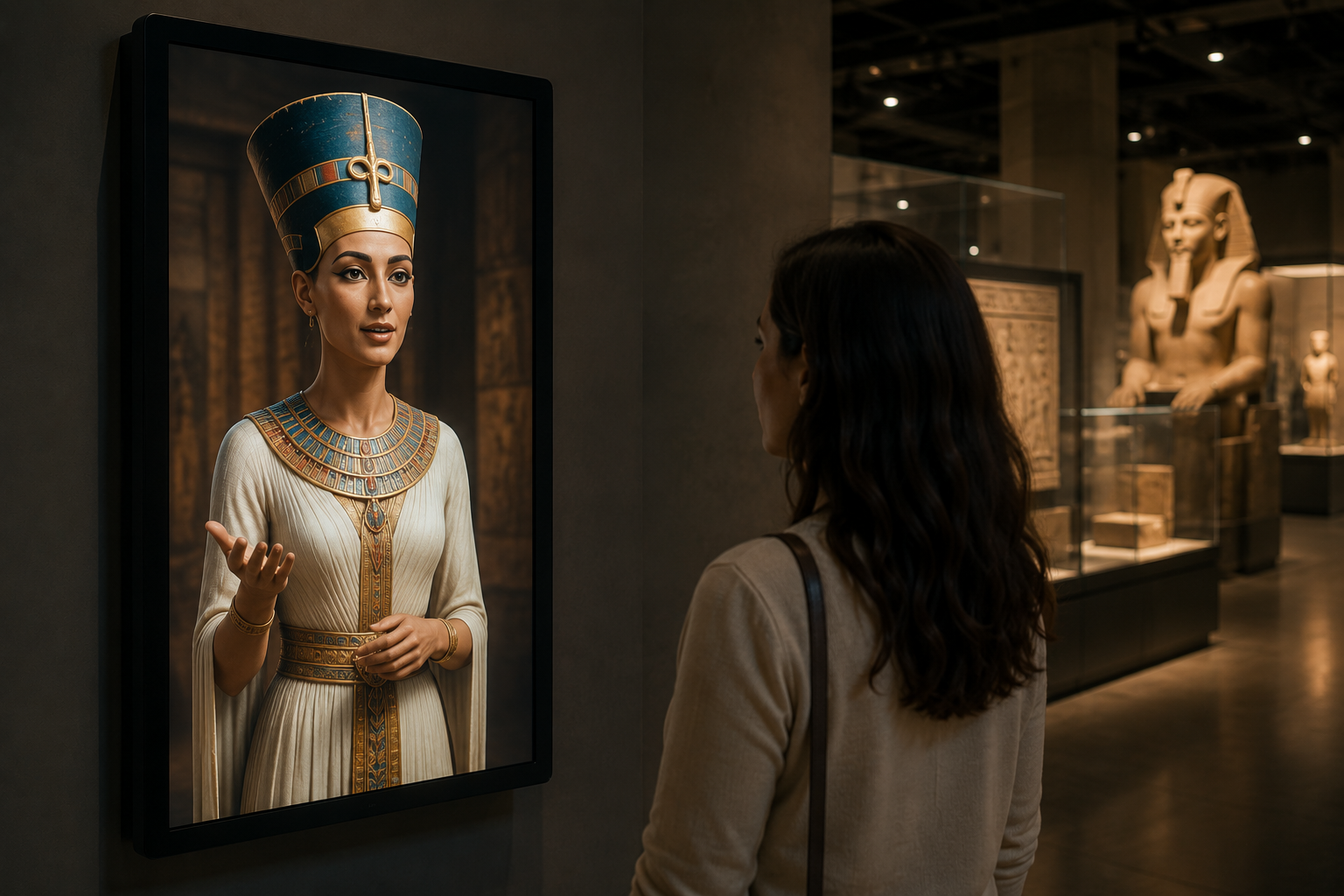
A museum might bring Cleopatra or Nefertiti to life and allow visitors to learn history directly from the people who lived it.
A corporate reception system may require a professional digital concierge.
A children’s educational application may need a completely different personality.
The goal is not to create the most realistic avatar possible.
The goal is to create the right character for the people who will interact with it.
Most Companies Are Solving the Wrong Problem
When companies start building AI assistants, they often focus on technology.
The language model.
The voice synthesis.
The integration.
The hardware.
The software.
But they rarely ask a much more important question:
Who should this character be?
Because the answer depends entirely on the audience.
A rehabilitation platform might benefit from a friendly older woman demonstrating exercises.
A museum might bring Cleopatra or Nefertiti to life and allow visitors to learn history directly from the people who lived it.
A corporate reception system may require a professional digital concierge.
A children’s educational application may need a completely different personality.
The goal is not to create the most realistic avatar possible.
The goal is to create the right character for the people who will interact with it.
Why Most AI Avatars Still Feel Artificial
Today’s AI can generate remarkably convincing images.
A single frame is easy.
Consistency is hard.
A digital face may look perfect in a screenshot.
Then begin to fall apart the moment it starts moving.
Facial proportions shift.
Expressions become inconsistent.
Eye movement feels unnatural.
Body language stops matching emotion.
The character slowly drifts away from itself.
Humans notice this immediately.
Often without understanding exactly why.
This is one of the main reasons many AI-generated avatars still struggle to feel believable during extended interactions.
Why Most AI Avatars Still Feel Artificial
Today’s AI can generate remarkably convincing images.
A single frame is easy.
Consistency is hard.
A digital face may look perfect in a screenshot.
Then begin to fall apart the moment it starts moving.
Facial proportions shift.
Expressions become inconsistent.
Eye movement feels unnatural.
Body language stops matching emotion.
The character slowly drifts away from itself.
Humans notice this immediately.
Often without understanding exactly why.
This is one of the main reasons many AI-generated avatars still struggle to feel believable during extended interactions.
Motion Capture Is Not About Animation
Most people think motion capture is simply a way to animate characters.
In reality, it is something much more valuable.
Motion capture is a way of recording real human behaviour.
Weight transfer.
Posture changes.
Timing.
Balance.
Subtle gestures.
Micro-expressions.
All the tiny details that humans naturally produce without thinking about them.
Instead of trying to invent these behaviours from scratch, motion capture allows us to capture them directly from real performers.
These recordings can then become high-quality data for animation systems, digital humans and interactive experiences.
The result is movement that feels natural because it originated from natural movement.
Motion Capture Is Not About Animation
Most people think motion capture is simply a way to animate characters.
In reality, it is something much more valuable.
Motion capture is a way of recording real human behaviour.
Weight transfer.
Posture changes.
Timing.
Balance.
Subtle gestures.
Micro-expressions.
All the tiny details that humans naturally produce without thinking about them.
Instead of trying to invent these behaviours from scratch, motion capture allows us to capture them directly from real performers.
These recordings can then become high-quality data for animation systems, digital humans and interactive experiences.
The result is movement that feels natural because it originated from natural movement.
Building Digital Humans That Last
At CG Visuals, we specialise in creating complete digital human pipelines.
Not just avatars.
Not just animation.
Complete characters.
Our process combines:
– Character design
– Professional 3D modelling
– Production-ready rigging
– Facial systems
– Motion capture
– Facial performance capture
– Unreal Engine integration
– AI integration
– Interactive systems
This allows us to create digital humans that maintain their identity over time rather than becoming inconsistent collections of generated frames.
Building Digital Humans That Last
At CG Visuals, we specialise in creating complete digital human pipelines.
Not just avatars.
Not just animation.
Complete characters.
Our process combines:
– Character design
– Professional 3D modelling
– Production-ready rigging
– Facial systems
– Motion capture
– Facial performance capture
– Unreal Engine integration
– AI integration
– Interactive systems
This allows us to create digital humans that maintain their identity over time rather than becoming inconsistent collections of generated frames.
From Museums to Healthcare
The same technology can be applied in many different ways.
A historical figure guiding visitors through a museum.
A digital assistant helping patients navigate a healthcare facility.
A virtual trainer supporting rehabilitation exercises.
An AI concierge welcoming guests to a corporate headquarters.
The technology changes.
The audience changes.
The purpose changes.
But the principle remains the same.
People respond to characters that feel authentic, relatable and natural.
From Museums to Healthcare
The same technology can be applied in many different ways.
A historical figure guiding visitors through a museum.
A digital assistant helping patients navigate a healthcare facility.
A virtual trainer supporting rehabilitation exercises.
An AI concierge welcoming guests to a corporate headquarters.
The technology changes.
The audience changes.
The purpose changes.
But the principle remains the same.
People respond to characters that feel authentic, relatable and natural.
The Day Your AI Assistant Becomes a Person
The future of AI assistants will not be defined by how intelligent they become.
It will be defined by how natural they feel.
The most important question is not:
“How realistic is your avatar?”
The most important question is:
“Who should this avatar be?”
Because people don’t build relationships with technology.
They build relationships with what feels natural.
The Day Your AI Assistant Becomes a Person
The future of AI assistants will not be defined by how intelligent they become.
It will be defined by how natural they feel.
The most important question is not:
“How realistic is your avatar?”
The most important question is:
“Who should this avatar be?”
Because people don’t build relationships with technology.
They build relationships with what feels natural.
Industry Insights
Thoughts, experiences and practical knowledge from the worlds of LED technology, immersive environments, animation and live productions.
 Event Visuals
You Spent €100,000 on an LED Screen. Don’t Let the Graphics Ruin It.
You Spent €100,000 on an LED Screen. Don’t Let the Graphics Ruin It. A giant LED screen can make a
 Event Visuals
Why Most LED Screen Visuals Fail on Real Screens
Why Most LED Screen Visuals Fail on Real Screens Why Most LED Screen Visuals Fail on Real Screens I have
 Installations
Why Many Interactive Installations Don’t Need a Custom App
Why Many Interactive Installations Don’t Need a Custom App Designing Reliable Multimedia Systems for Museums, Smart Buildings and Immersive Spaces
 3D Animation
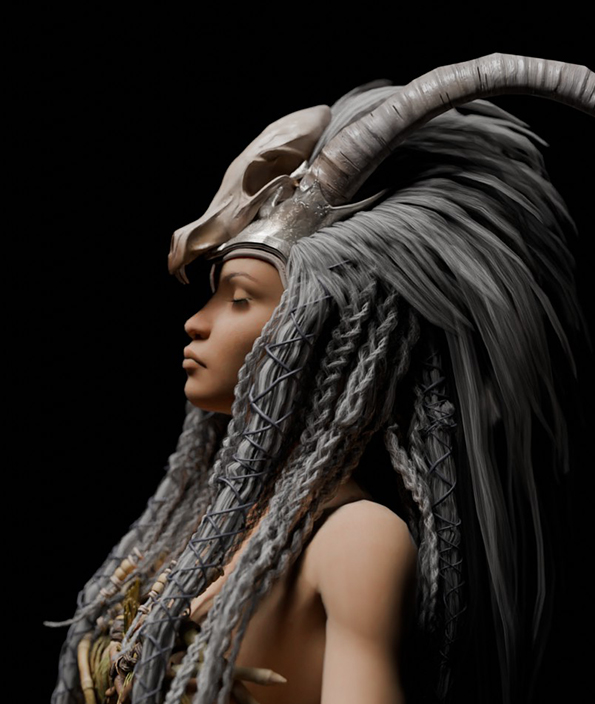
The Moment a Digital Character Starts Feeling Human
The Moment a Digital Character Starts Feeling Human If you’ve spent any time on social media recently, you’ve probably seen
 Installations
The Day Your AI Assistant Became a Person
The Day Your AI Assistant Became a Person During my own rehabilitation, I noticed something interesting.The application I was using
 Event Visuals
I Built a Giant Festival Character. Here’s What I Got Wrong.
I Built a Giant Festival Character. Here’s What I Got Wrong. If you’ve spent any time on Instagram in the
 3D Animation
Every Generation of Artists Has Been Afraid of Something
Every Generation of Artists Has Been Afraid of Something Maybe you’ve been browsing our website or reading our recent posts
Industry Insights
Thoughts, experiences and practical knowledge from the worlds of LED technology, immersive environments, animation and live productions.
3D Animation
Every Generation of Artists Has Been Afraid of Something
Every Generation of Artists Has Been Afraid of Something Maybe you’ve been browsing our website or reading our recent posts
Installations
The Day Your AI Assistant Became a Person
The Day Your AI Assistant Became a Person During my own rehabilitation, I noticed something interesting.The application I was using
Installations
Why Many Interactive Installations Don’t Need a Custom App
Why Many Interactive Installations Don’t Need a Custom App Designing Reliable Multimedia Systems for Museums, Smart Buildings and Immersive Spaces
Event Visuals
I Built a Giant Festival Character. Here’s What I Got Wrong.
I Built a Giant Festival Character. Here’s What I Got Wrong. If you’ve spent any time on Instagram in the
Event Visuals
You Spent €100,000 on an LED Screen. Don’t Let the Graphics Ruin It.
You Spent €100,000 on an LED Screen. Don’t Let the Graphics Ruin It. A giant LED screen can make a
Event Visuals
Why Most LED Screen Visuals Fail on Real Screens
Why Most LED Screen Visuals Fail on Real Screens Why Most LED Screen Visuals Fail on Real Screens I have
3D Animation
The Moment a Digital Character Starts Feeling Human
The Moment a Digital Character Starts Feeling Human If you’ve spent any time on social media recently, you’ve probably seen